
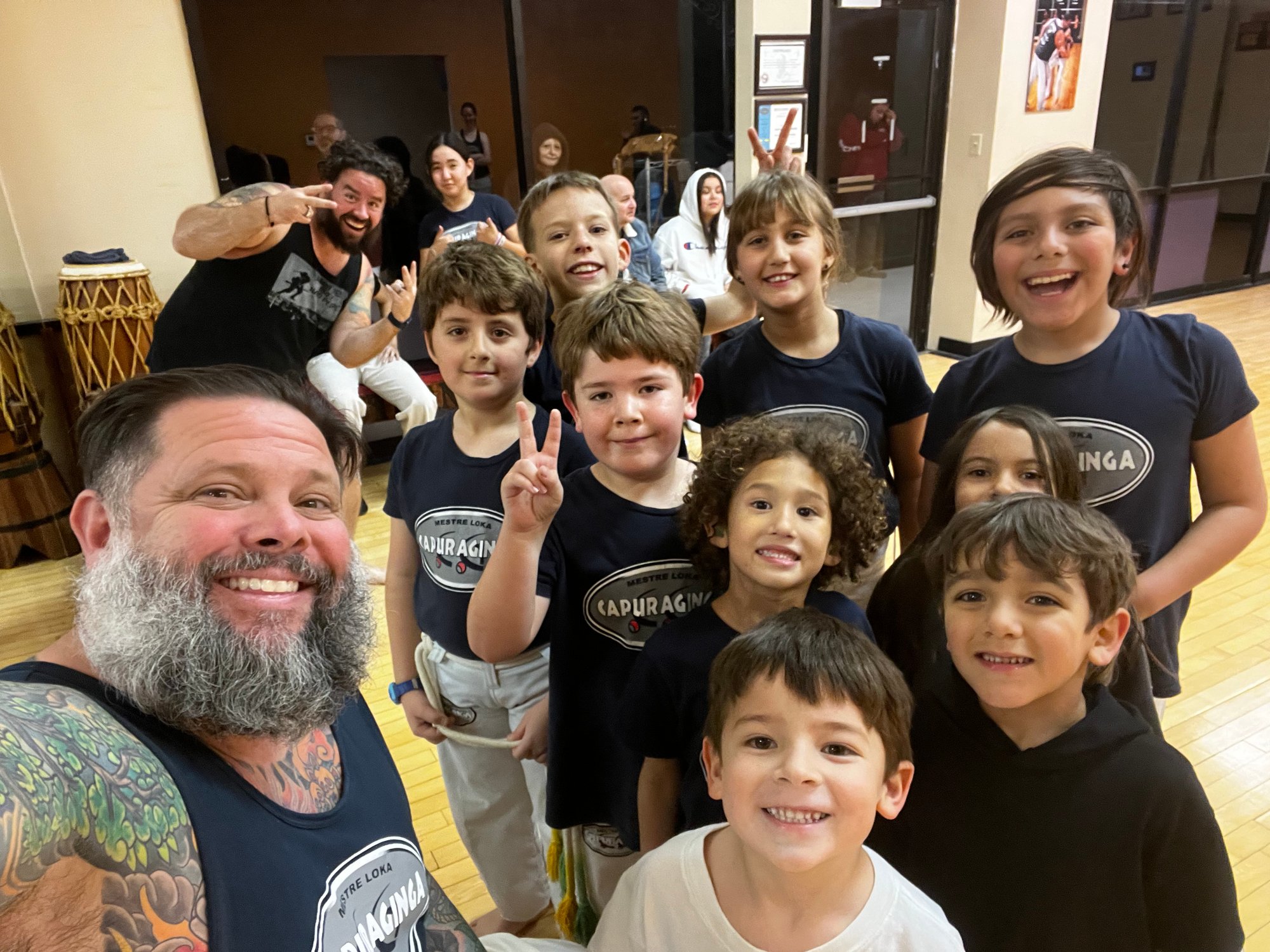
I get asked this question constantly. A parent walks in, their kid is bouncing off the walls in the lobby, and they look at me and say — "Is this actually good for kids? Like, really?"
After 25 years of teaching Capoeira in San Antonio, my answer is always the same: it depends on what you're looking for. And then I ask them what they're hoping their child gets out of it.
Because here's the thing — Capoeira isn't for every kid. But for the right kid, it changes everything.
What Capoeira Actually Is
Most people walk in thinking Capoeira is a martial art where kids kick each other. It's not. Capoeira is a Brazilian art form that blends movement, music, self-defense, and culture into something unlike anything else your child will ever experience.
It was created by enslaved Africans in Brazil over 400 years ago as a way to practice self-defense disguised as a dance. That history — that story — is part of every single class we teach at The Brazilian Capoeira Academy. Your kid isn't just learning to kick. They're connecting to something real.
What Kids Actually Learn
Here's what I see in my students after 60 to 90 days of consistent training:
Physical fitness that sticks. Capoeira builds strength, balance, flexibility, and coordination in ways that feel like play. Kids who struggle to focus in a traditional gym setting thrive here because the movement is engaging. There's always something new to learn. I've watched kids who couldn't do a cartwheel walk in and perform full acrobatic sequences within six months.
Confidence you can see. This one is hard to put into words until you witness it. A shy kid comes in, barely making eye contact. A few months later, that same kid is leading warm-ups and teaching younger students their first kicks. The confidence that comes from mastering something difficult — really difficult — is different from the confidence that comes from a trophy or a participation ribbon. It's earned. Kids know the difference.
Discipline without the drill sergeant. I don't yell. I don't shame. But the culture of Capoeira demands discipline naturally. You can't rush the art. You have to show up, put in the work, and be patient. Kids absorb this without even realizing it. Parents notice it at home first — they tell me their kid is more focused on homework, more patient with siblings, more willing to stick with hard things.
Cultural exposure that broadens their world. We sing in Portuguese. We play traditional instruments — the berimbau, the atabaque, the pandeiro. We study Brazilian history and African heritage. In a world where kids are increasingly staring at screens, this is something tangible and alive. It connects them to a story bigger than themselves.
Real self-defense capability. Capoeira is a martial art at its core. The kicks, the evasions, the awareness of space — these are real skills. But more importantly, the confidence and presence that Capoeira builds means most kids never need to use it. That's the point.
Who Capoeira Is Perfect For
In my 25 years of teaching, the kids who get the most out of Capoeira tend to share a few things:
They're bored with traditional sports. Soccer, baseball, basketball — these are great. But some kids need something that challenges them differently. Capoeira is creative, artistic, and physical all at once.
They need an outlet for energy. Capoeira is intense. A kid with a lot of energy will leave class tired in the best way possible — focused and calm.
They're looking for something to call their own. Every kid wants to be good at something. Capoeira gives them that. And because it's so unique, they become the kid who does something no one else does. That's a big deal at that age.
They want to belong somewhere. The community inside a Capoeira school is unlike anything in youth sports. We look out for each other. Older students teach younger ones. Nobody gets left behind.
Who Should Maybe Think Twice
I'll be honest here too, because I think parents deserve a straight answer.
If your child needs a highly structured, competition-based environment right away — Capoeira might feel different at first. We compete eventually, but the early emphasis is on individual growth, not beating someone else.
If your child is very young — under 4 — I'd wait a year. At The Brazilian Capoeira Academy we start kids at age 4, and that's genuinely the right age. Before that, the body and the attention span aren't quite ready for what we do.
What Parents Tell Me After the First Month
"I didn't expect them to love it this much."
That's the most common thing I hear. Parents come in curious or skeptical, their kid tries a free class, and two weeks later I've got a kid begging to come to every session.
The other thing I hear: "I wish we'd found this sooner."
Capoeira has been in San Antonio for a long time. But it's still something most families here haven't discovered yet. When they do, they wonder how they lived without it.
Ready to See It for Yourself?
The best way to answer the question "is Capoeira good for my kid?" is to come watch a class. Better yet — let your child try one for free.
At The Brazilian Capoeira Academy in San Antonio, we offer a free trial class for kids ages 4 through 10. No commitment, no pressure. Just come see what happens when your kid steps on the floor for the first time.
DM us on Instagram at @sanantoniocapoeira or send us a message through our website at go-cap.com. We'd love to meet your family.